Key Takeaways
- Myopia (commonly known as nearsightedness) means nearby objects look clear, but distant ones look blurry.
- Common signs include squinting, sitting too close to screens, and eye strain after school.
- Family history and limited time spent outdoors can increase a child’s risk.
- Annual eye exams help catch myopia early.
- Glasses, contact lenses, and other options can help manage myopia in kids.
What Every Parent Should Know About Myopia in Kids
Your child keeps scooting closer to the TV, squinting at the whiteboard, or complaining of headaches after school. At The Village Eye Care, we see these symptoms often, and our team wants to help families understand what myopia is and how to support children’s growing eyes.
Myopia (commonly called nearsightedness) affects distance vision, and it often develops in childhood. The good news is that when parents know what to look for, myopia can be detected earlier through children’s eye exams, opening up options for managing its progression.
What Is Myopia?
Myopia happens when the eyeball grows slightly too long from front to back. This causes light to focus just in front of the retina (at the back of the eye) instead of directly on it. That small difference is what makes faraway things look blurry while close-up objects stay clear.
Because children are growing so quickly, myopia often develops during school-aged years. If your child has myopia, they’ll have no trouble reading a book, but they won’t be able to see the whiteboard on the other side of the classroom. Vision is key to development, so detecting a vision problem early is an important way to support your child in and out of the classroom.
Common Signs to Watch for in Your Child
Behavioral Clues at Home
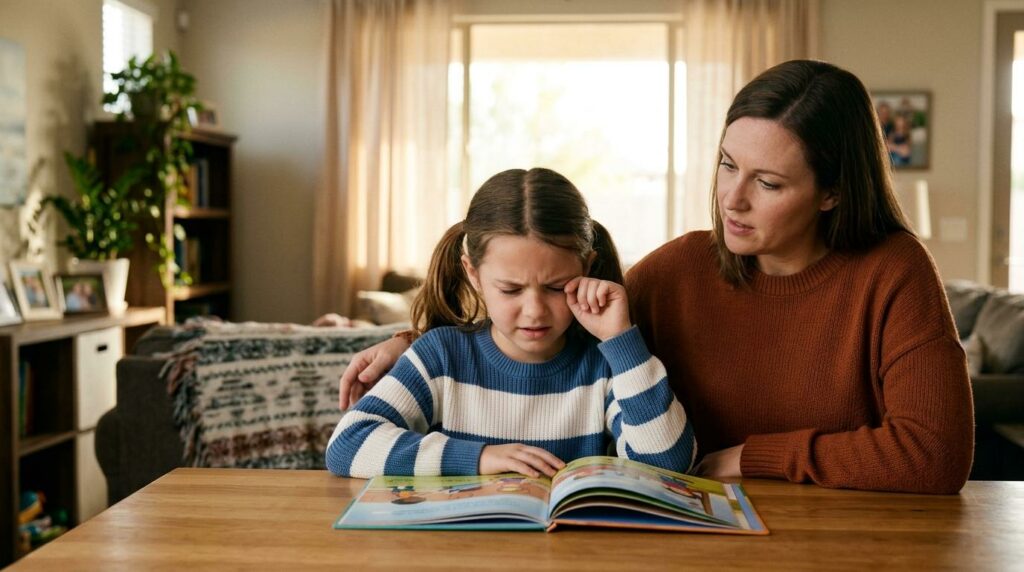
Some of the clearest signs of needing glasses show up right at home during everyday moments. Your child might pull their chair right up to the TV or hold a book practically against their nose. These habits aren’t always a coincidence: They might be your child’s way of getting the clearest view possible.
Watch for frequent squinting or excessive blinking, too. Squinting can help sharpen a blurry image just enough to see, and frequent blinking can signal eye strain. If it’s happening often, that’s worth paying attention to.
Signs That Show Up at School and During Activities
Because school tends to involve lots of activities that require seeing far away, they’re often when myopia becomes more noticeable. If your child is struggling to read what’s written on the board from their seat, they may be dealing with distance vision problems. Teachers sometimes notice this before parents do.
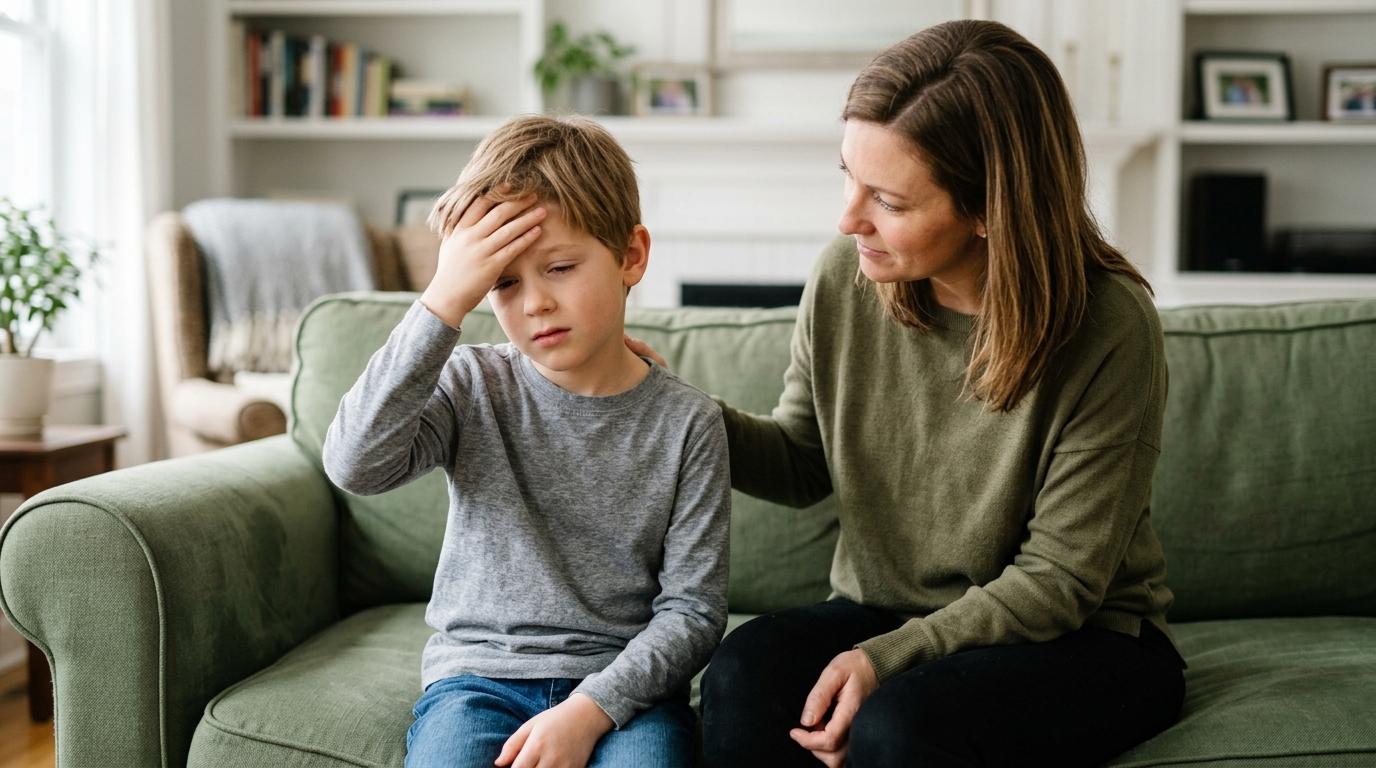
Headaches after a long school day or extended periods of visual concentration may also occur in some children with uncorrected vision problems. Playing sports can reveal it, too. A child who consistently has trouble seeing a ball at a distance or following action across the field might not just be having an off day. Their vision could be making things harder than they need to be.
Risk Factors Worth Knowing
If 1 or both parents are nearsighted, there’s a higher chance their child could develop myopia as well. It doesn’t guarantee anything, but it’s a useful piece of the picture when you’re watching for early signs.
Genetics aren’t the only thing that plays a factor. Limited time outdoors has also been linked to a higher risk of myopia developing in children. Natural light and looking at distant objects seem to play a role in healthy eye development.
What an Eye Exam for Kids Looks Like
When to Schedule a Visit
Once your child starts school, annual eye exams are a smart part of their routine health care. Vision changes can happen quickly at this age, and yearly check-ins help detect any shifts early. If you’ve already noticed any of the signs mentioned above, scheduling sooner rather than later is a reasonable move.
What Eye Doctors Can Check During the Visit
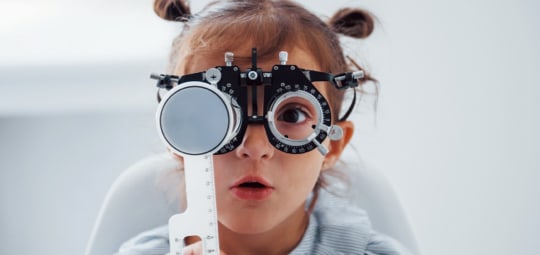
Our eye doctors in Surprise can walk kids through a few key tests during a comprehensive eye exam. Our team can check how well your child sees at a distance, as well as how their eyes are functioning and developing.
Ways to Help Manage Your Child’s Myopia
Treatment Options
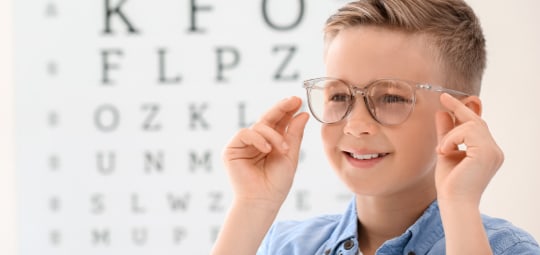
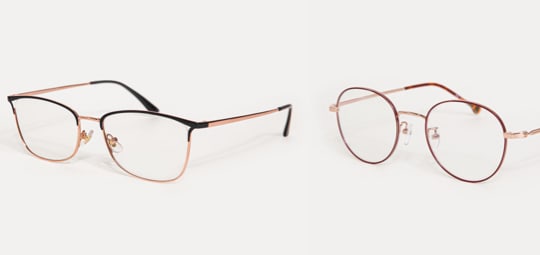
Prescription glasses are often the first step for kids with myopia. They’re easy to manage, comfortable, and can be updated as your child’s prescription changes. Contact lenses are an option for kids who are ready for the responsibility that comes with proper hygiene routines.
Orthokeratology lenses, or ortho-k, are specially designed lenses worn overnight that temporarily reshape the cornea (the clear outer layer of the eye) and may help slow the progression of myopia in some children. Low-dose atropine eye drops are another option that some eye doctors recommend to help slow the progression of myopia in children.
Simple Habits That Support Eye Health
More outdoor time in natural light is one of the most talked-about lifestyle factors when it comes to myopia. Encouraging your child to spend time outside each day, away from close-up tasks, can be a helpful part of the overall picture.
Regular breaks from screens and reading also give the eyes a chance to rest and refocus at a distance. A simple habit like looking up and across the room every 20 minutes during screen time can add up over the course of a day. The 20-20-20 rule is an easy way to build that habit into your child’s daily routine.
Take the Next Step for Your Child’s Vision
Myopia in kids is common, but it doesn’t have to go unnoticed. The earlier it’s caught, the more options families have for managing it. Paying attention to the signs at home and at school can help support your entire family’s eyesight.
Book Your Family’s Eye Exams
Our team at The Village Eye Care is dedicated to helping your entire family see clearly and comfortably. Whether you’re curious about myopia control or want an eye exam for your child, we encourage you to schedule a visit and get the answers you’re looking for.