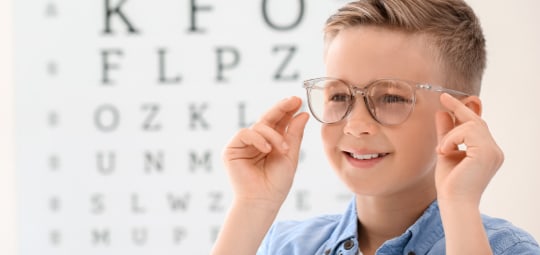

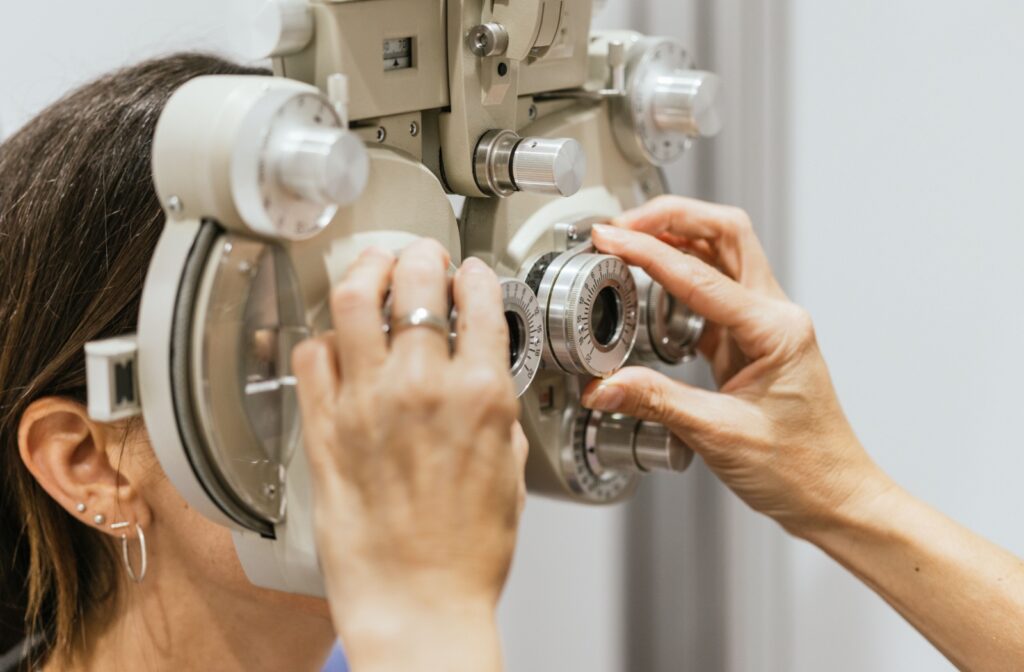
If you’ve had an eye exam before, you know the test: You’re sitting in the exam chair, looking at a distant chart of letters that get smaller with every line. Your eye doctor at The Village Eye Care asks you to read the smallest line you can see, and then the process of finding your prescription begins.
A refraction test is the part of your eye exam that helps the eye doctor pinpoint the prescription you need for clear vision.
A Simple Look at How Your Eyes Bend Light
Your eye takes in light and focuses it onto a single point at the back of your eye (your retina) to create a clear picture. When your eye’s shape isn’t quite right, light doesn’t focus correctly, which causes a kind of blurry vision called a refractive error.
A refraction test helps your eye doctor find the precise lens power needed to correct the way light enters your eye. By fine-tuning this correction, the eye doctor can give you a prescription that helps bring the world into focus, whether you are reading a book or looking at a street sign.
Common Vision Conditions a Refraction Test Can Find
A refraction test is great at identifying common vision issues. These can include:
- Myopia (nearsightedness): This condition makes distant objects appear blurry, while objects up close remain clear. You might find it hard to read road signs, but have no trouble with your phone screen.
- Hyperopia (farsightedness): You may have difficulty seeing objects up close, while your distance vision is sharper. Reading a menu or a book might make your eyes feel strained.
- Astigmatism: This can happen when your eye is shaped more like a football than a basketball. It can cause vision to be blurry or distorted at all distances.
- Presbyopia: This is a natural, age-related change that affects near vision. You may notice you need to hold things further away to read them clearly.
What to Expect During the Test
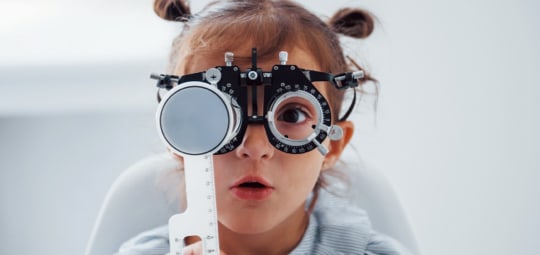
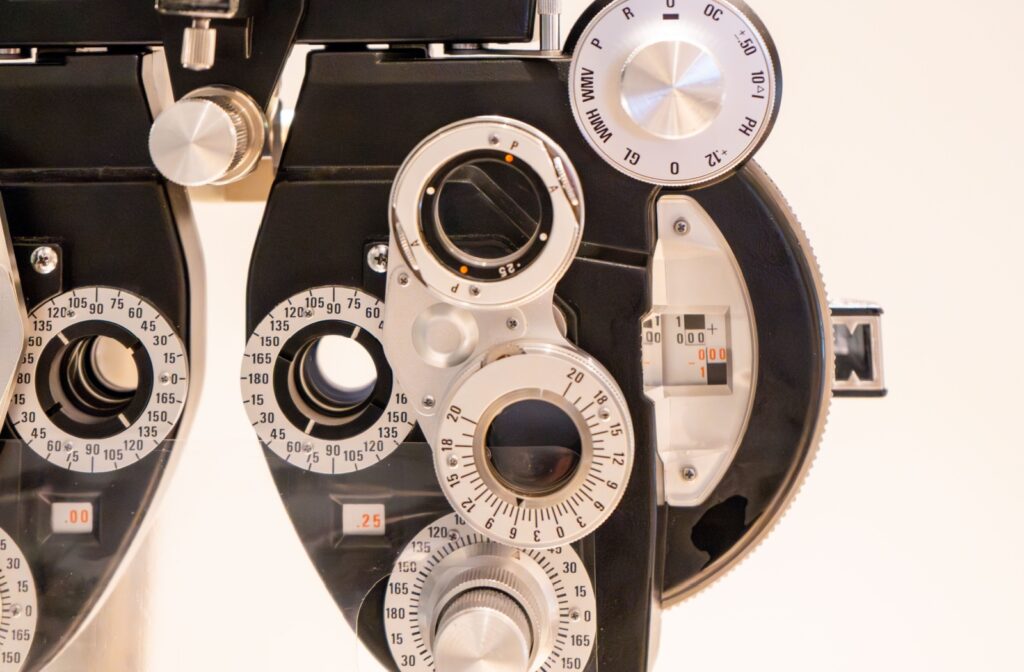
The eye exam is made up of a few stages, including a refraction test. For most people, this test is comfortable and simple: All you have to do is tell the eye doctor which option looks clearer to you. They can start by placing a large instrument with many lenses, called a phoropter, in front of your eyes.
Steps of a Refraction Test
The refraction test will often include a few key steps. Your test will likely go something like this:
- You may look through the phoropter at an eye chart across the room.
- The eye doctor can flip between 2 different lens options for each eye.
- They may ask you a familiar question: “Which one looks clearer, 1 or 2?”
- Your answers help guide the eye doctor to the most accurate lens power your eyes need for clear vision.
We understand that it’s natural to feel a little anxious when doing an exam for the first time, but don’t worry. It may encourage you to know that there are no wrong answers: It’s all based on what looks clearest to you.
The Role of Refraction in a Comprehensive Eye Exam
It’s helpful to understand how a refraction test fits into your overall eye health evaluation. While it’s an important step, it is just 1 piece of the puzzle.
Is a Refraction Test a Full Eye Exam?
A refraction test is not the same as a full eye exam. A comprehensive exam goes much deeper, checking the complete health of your eyes. The eye doctor can also look for signs of eye conditions that may not have obvious symptoms, helping to give you a complete picture of your eye health.
Dilation and Refraction: What’s the Difference?
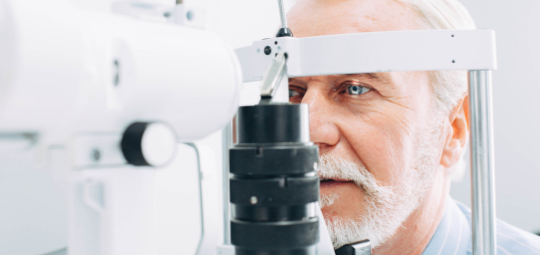
These are 2 separate but important tests. A refraction test is for measuring your prescription to help you see better. Dilation involves using special eye drops to widen your pupils. Dilation helps the eye doctor get a clear, wide view of the back of your eye to check the health of your retina.
Your Personalized Prescription and Clearer Vision
The final result of your refraction test is a personalized prescription tailored to you. This set of numbers is used to create glasses or contact lenses that help to correct your specific vision needs, often helping with things like eye strain or headaches. It’s important to remember that contact lens prescriptions are different from those for glasses, as they require additional measurements.
Find Your Prescription with Our Team
If fuzzy letters and blurry signs have become a part of your daily life, an updated or new prescription can make a big difference. Our team at The Village Eye Care in Surprise, Arizona, is here to provide you and your family with the eye care you need. Schedule your appointment to get a clear view of your world.