You probably think about your eyes when you notice things look a little blurry or when it’s time for new glasses. But your eye health is about more than just how well you can read a sign down the street. It’s a window into your overall wellness, as eye exams can even detect diabetes and other conditions.
There are different types of eye checkups, and it’s helpful to know what each one does. A comprehensive eye exam is a complete evaluation of your vision and the health of your eyes, and it goes far beyond a basic screening. This detailed look, which is part of our adult and senior eye care, helps find eye problems at their earliest stages—often before you notice any symptoms yourself.
Comprehensive Exams & Routine Screenings
You might think all eye appointments are the same, but they serve different purposes. A simple vision screening is a quick check, while a comprehensive exam is a much deeper dive into the health of your eyes.
Routine Vision Screenings
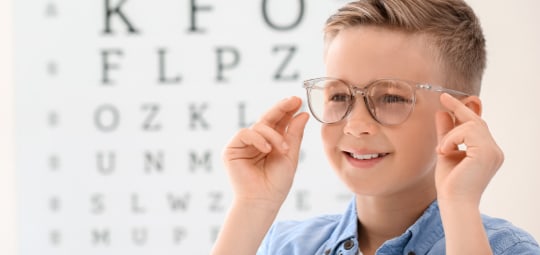
A routine vision screening is a basic test to check your visual acuity (the sharpness of your vision). It’s the kind of check you might get at school or the DMV. The main goal is to see if you need glasses or contacts to see clearly.
These screenings are useful but limited. They don’t check for eye conditions or other health issues, so they’re simply a starting point to see if a more thorough examination is needed.
Comprehensive Eye Exams
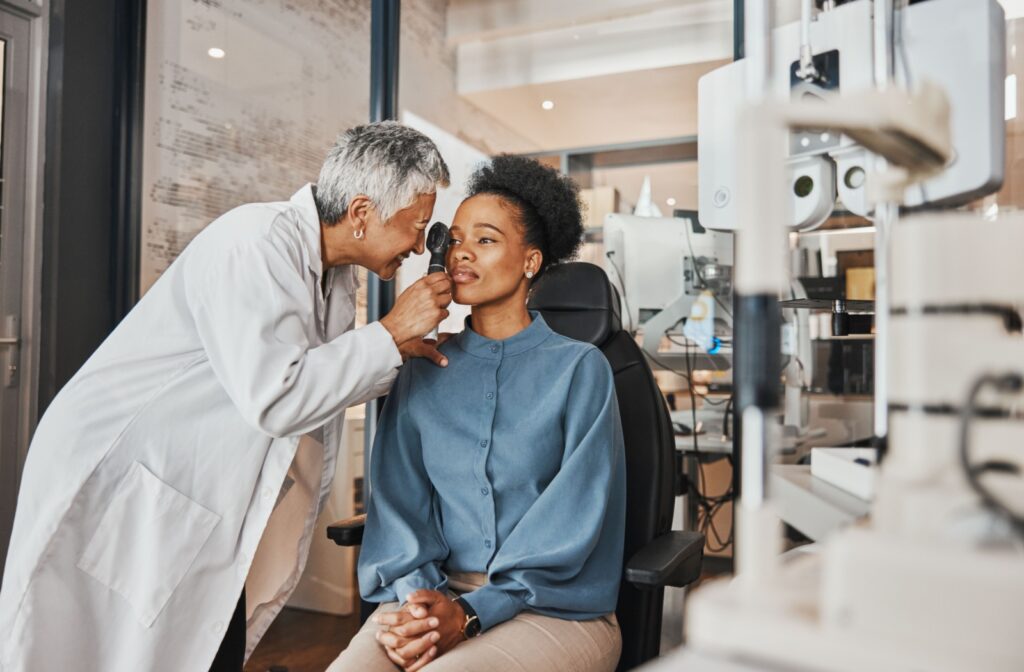
This type of exam is a complete health checkup for your eyes. Your optometrist doesn’t just figure out your prescription—they also look at the physical structures inside and around your eyes. This allows them to check for signs of eye conditions or even other health problems.
What a Comprehensive Exam Includes
When you come in for a full eye exam, we perform several tests to get a complete picture of your eye health. Here are some of the common ones.
Talk About Your Health History
We’ll start with a friendly chat about your health. We’ll ask about your personal and family medical history, any medications you take, and any vision issues you’ve been having. This conversation gives us important context for your eye health.
Tests for Your Vision
Next, we’ll run a series of tests to evaluate your vision. This includes the familiar eye chart to measure how well you see at various distances. We’ll also test your side vision, eye muscle movements, and how your eyes work together as a team.
Vision tests identify problems like nearsightedness, farsightedness, and astigmatism. This allows us to determine which prescription (if any) will give you the clearest sight.
Tests for Your Eye Health
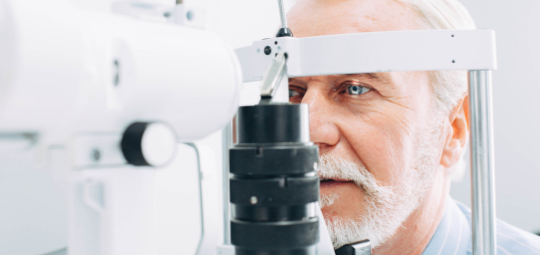
This is where we look closely at the physical health of your eyes. We check the pressure inside your eyes—a key test for glaucoma. We also examine the front of your eye, including the cornea, iris, and lens, to check for issues like cataracts and dry eye.
Pupil Dilation & Its Purpose
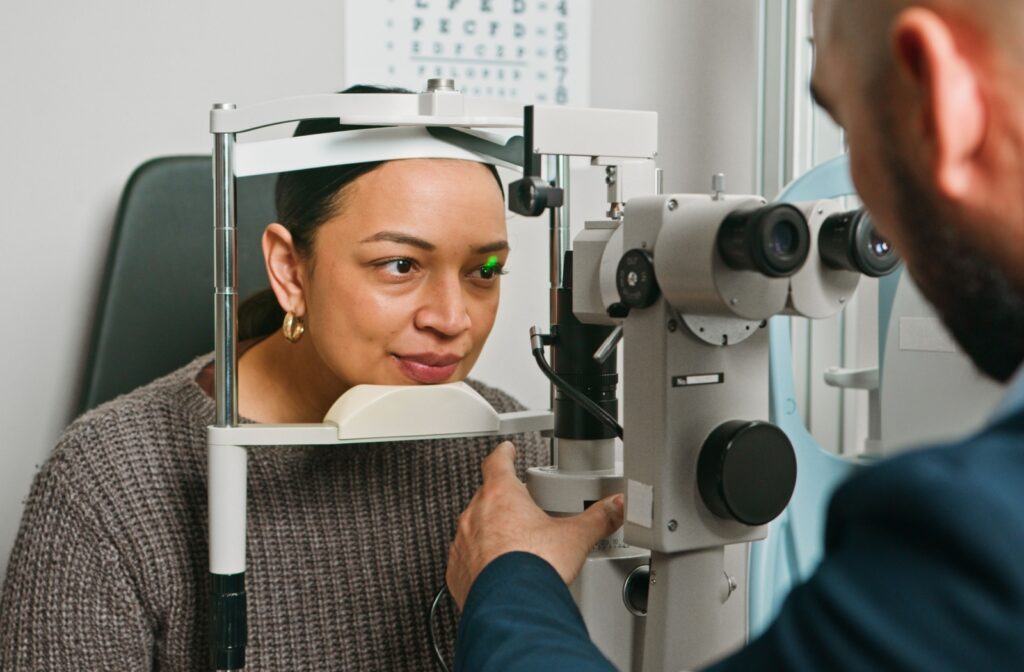
In some cases, to see the back of your eye more clearly, we may use special drops to widen your pupils. This is called dilation, and it’s completely painless. A dilated eye exam gives us a clear view of your retina and optic nerve, which is important for spotting signs of eye conditions early on.
The Importance of a Full Eye Exam
A comprehensive eye exam is a key part of maintaining your overall health. Your eyes can reveal a lot, and regular checkups help keep them healthy for years to come.
Here’s why eye exams are so valuable:
- Detect common eye conditions like glaucoma or cataracts
- Update your prescription for clear, comfortable vision
- Identify early signs of other health issues, such as those addressed in regular diabetic eye exams or high blood pressure
- Provide a baseline to track your eye health over time
How Often You Need an Eye Exam
How often you should get a comprehensive eye exam depends on your age, health, and risk factors. For most adults, an exam every one to two years is a good guideline.
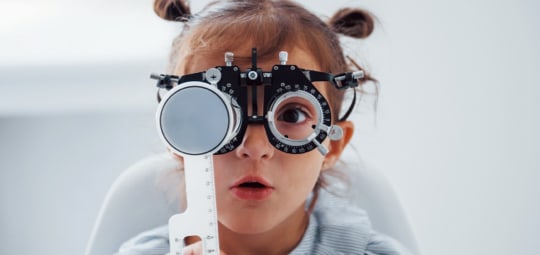
Children’s eye exams may be needed more frequently as their eyes develop. Often, this means yearly exams.
Prepare for Your Appointment
A little preparation can help your appointment go as smoothly as possible. When you know what to bring and what to expect, you can feel more relaxed and focused. As your eye doctors in Surprise, we want you to feel comfortable from the moment you walk in.
Here are a few tips to help you get ready for your visit:
- Make a list of any vision symptoms you’ve noticed, like blurriness or headaches.
- Bring your current glasses, sunglasses, and contact lenses with you, but keep in mind there are specific guidelines on wearing contacts to an eye exam.
- Write down any questions you have for us so you don’t forget.
- Plan for a friend or family member to drive you home if we expect to dilate your eyes.
Regular eye care is an important commitment to your health and well-being. Our team at The Village Eye Care is here to provide you and your family with thorough and thoughtful exams. We look forward to helping you see clearly. Feel free to reach out to our team of Eye Doctors in Surprise to schedule your next appointment. We’re here to answer your questions and support your vision health. Let’s work together to keep your eyes healthy.